Without a Paddle
Ponderings of an Uncommon Life
The Golden Rule Applied
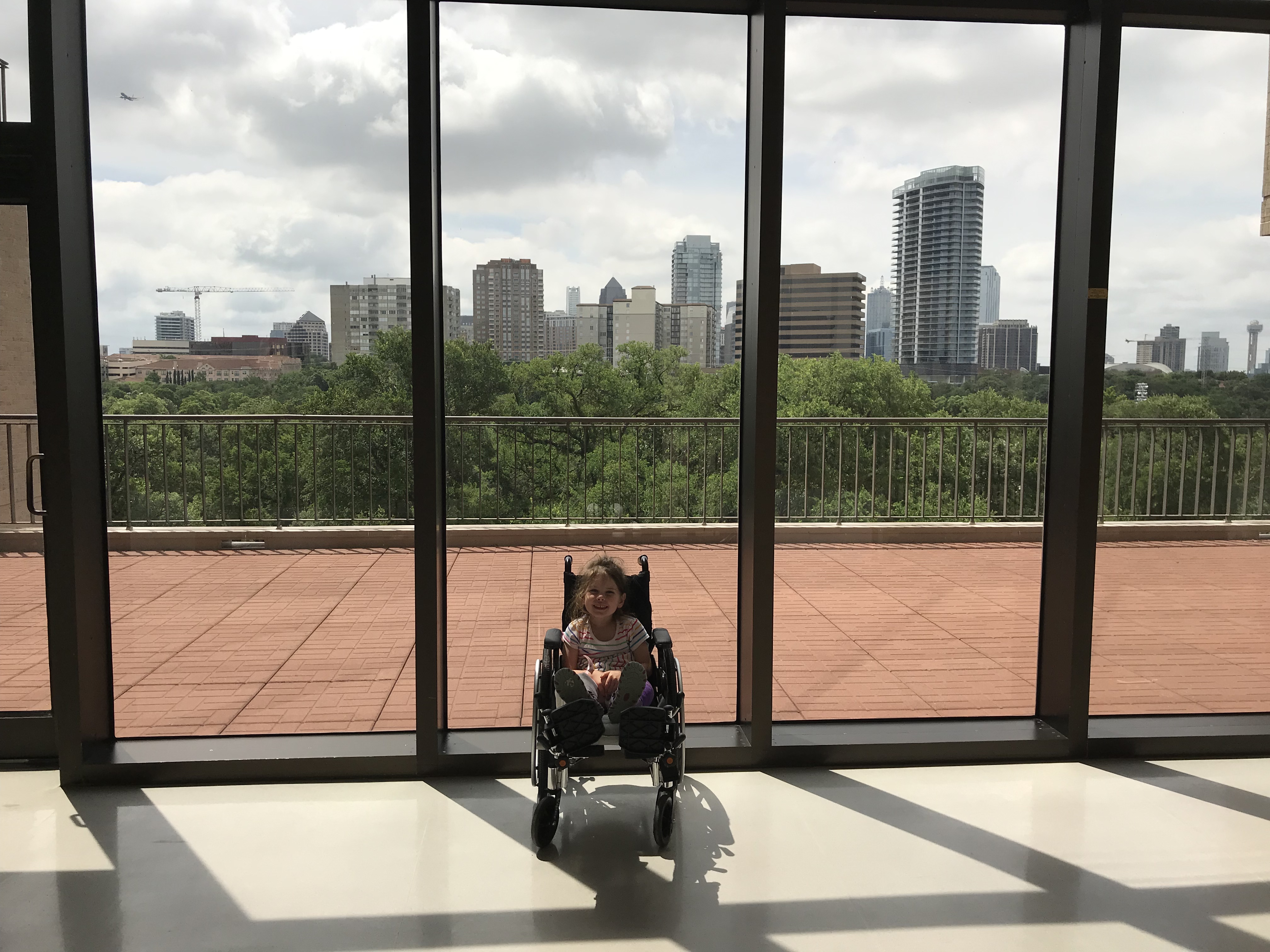
It has been nearly two weeks since Helena got her second set of casts. The change has been for the most part a huge relief. She had a huge pressure sore forming above her knee that they caught fairly quickly. When Dr. Karol changed the casts, she more heavily padded the right one, and moved the bottom of the upper cast up to where the sore could heal. It has felt much better for her up until the past couple of days.
The evening after the second procedure, we went outside for a picnic to celebrate our anniversary. It was lovely weather outside that night! Helena went over and played on the playground after we ate. She sang and smiled and slid down the slide – I didn’t realize it until that moment, but Helena had stopped singing during the first few days of casting, which is a significant departure from our normal routine. Pain can sure change behavior.
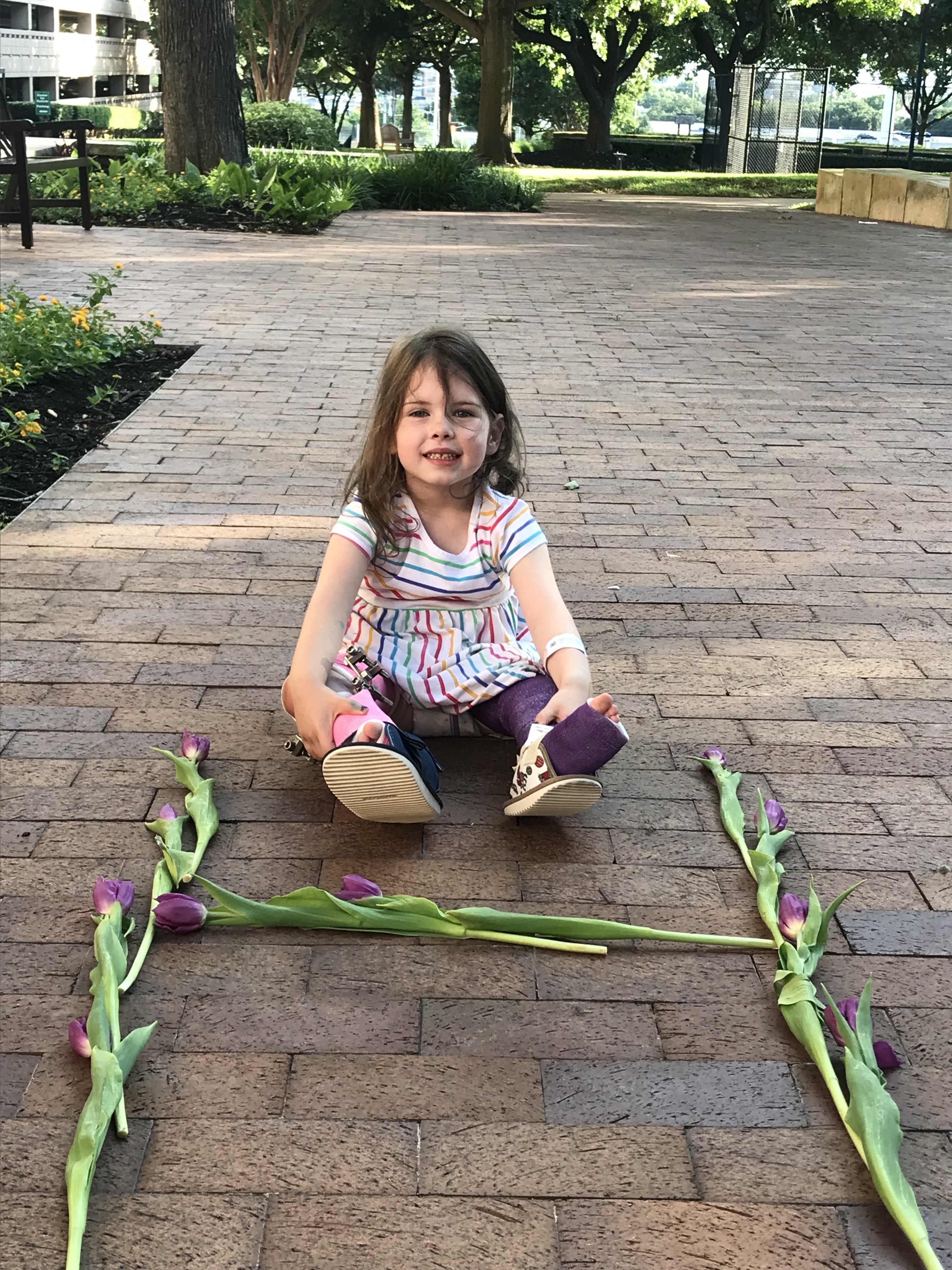

Despite feeling better than before, Helena was very angry that “those things” were still on her legs – and she is still in a lot of pain, mainly after the hinge bolts are turned. When we told her we were getting the casts “fixed,” I think she thought we were removing them for good. She woke up and saw that she had that dreaded IV back in her hand, and new casts were there. “They didn’t fix them- they put on more casts,” she wailed as we moved her back to her room.

As the casts are straightened in this procedure, the pressure of the cast shifts. In the beginning pressure is not so uncomfortable on the front part of the leg. However, as the cast is straightened, it creates more pressure toward the front of the thigh as the knee is straightened. It is also not a comfortable procedure because it is stretching her entire leg, down to her heels. But the process is working beautifully; she just got her last set of bolt turns and will be exchanging the hinges for two long hard casts Monday morning. Then we can go home for a little while!

Dr. Karol describes Helena as being “fiercely independent.” This is absolutely true. As a result, Helena has been struggling with being polite to her caretakers. Our biggest arguments are over taking medicine and doing things independently. I started an incentive chart with her – every time she is polite, she gets a sticker. Every time she takes her medicine without a fit, she gets a sticker. It has helped some – but sometimes, she just doesn’t feel well. And the last couple of days, it hasn’t worked much at all. She is four- who can blame her, I suppose? But I feel like we should be holding her accountable on being polite in any situation. There are too many excuses for not being polite these days.

While Her frustration is certainly understandable, it is not in her best interest to give her a free pass to engage in rude behavior, even if this is very hard. So we are continuing to point out her mistakes and challenge her to improve. She has gotten better about speaking kindly to caretakers – but it is a work in progress.
In doing this, I have been frequently repeating a phrase my teaching friend LuAnn would often say to her students (and we discussed often as teachers who work in sometimes challenging situations): “ALWAYS act nicer than you feel.”
Acting nicer than you feel is just another way of putting the Golden Rule. Some might even say it is the “impossible rule.” It is easier said than done, even for an adult. Our media and culture certainly has not been demonstrating this ideology in front of our children, who get more technology and inappropriate entertainment than they need – and for Helena, this concept Is definitely a challenge right now – because she rightly believes her caretakers are responsible for her pain.
This particular pain is going to improve things for her – but even if it wasn’t going to change a thing, we would still expect her to be kind to others. We have noticed that when Helena throws fits and is uncooperative with her caregivers, she is also complaining more about her pain level. When Helena is in control of her emotions and is positive and kinder toward her caregivers, she is able to tolerate the pain and continue to interact with her surroundings. A positive mindset influences how one experiences pain and responds to difficult situations, so it is in Helena’s best interest to help her maintain a positive mindset.
Even without her current situation and the need to stay positive, there will always be hard times to face and excuses to be angry. There will always bad situations – and we control our response to these situations. There will always be times when we need help and have to allow others to be there for us. And we will always have things to make us feel bad – but we can always choose to feel a little better and receive encouragement by being kind to others. God loves us. And beyond His greatest commandment, God’s command is to love others as we love ourselves. That includes when we feel bad, when we are angry, and when we disagree with someone else.

There are many versions of the Golden Rule hanging outside of the chapel in the hospital.
Today, Helena gets to leave the hospital for the weekend before getting her hard casts on Monday. As we prepare to go, Helena has already been rude to the nurse, and when I asked her why she has been acting rude, Helena’s reply was simply, “I don’t know.”
I told her once again, “Helena, we know you are tired of being here and your leg is sore. But you have to try to always act nicer than you feel. God loves you and God loves the nurses and doctors. They are trying to help you because they care about you. You need to try to be polite.”
Not long afterward, Dr. Karol came in to tell her goodbye. She has been great about coming to see her every day. Here is their conversation.
Dr. Karol: Good morning, Helena! I came to say goodbye. Can you say goodbye to me?
Helena: (looking away, saying nothing.)
Dr.Karol, looking at Helena’s bed: I like your pet snake. What is his name?
Helena: (nothing)
Me: His name is Fred, isn’t it?
Dr. Karol: I like that name. I think I would have probably named him “Slithers.”
Then suddenly, a little lightbulb came on.
Helena (To Dr. Karol): We saw a fuzzy caterpillar. It was at the farm!
Kind conversation is a start. Progress, not perfection is what we hope to see. We are so grateful for the patience and love given to Helena by Texas Scottish Rite Hospital for Children.

Keeping Busy
Today hasn’t been the easiest of days… but we have had a little bit of fun! Scottish Rite Hospital does a wonderful job of keeping kids busy so that they can heal in an environment that is kid-friendly.

No Pain No Gain

Last Wednesday, Helena went into the hospital to have Quengel casts put on her legs. The goal of this procedure is to gradually straighten her knees over time without having to subject her to a surgery. Most kids with knee contractures do have surgery; in fact, there are kids with AMC who have had needed a dozen or more surgeries by the time they have reached Helena’s age. We have only had one – and it was an outpatient procedure. We have spent time with doctors correcting club feet, determining whether her hips or her knees are a bigger issue and if surgery is needed, whether or not her quadriceps can be strengthened, and whether or not a neurological cause is part of the issue- which impacts the efficacy of surgery. If we can avoid it, we prefer that any surgeries are put off until Helena can have a voice in the decision -unless they are determined to be both absolutely necessary and beneficial to her long term quality of life.
Quengel casting is non-surgical, and appealed to us because it was not as invasive and would prevent the buildup of scar tissue, which can lead to problems over time. Furthermore, it will improve her posture and (I hope) will enable her to utilize muscles more effectively and strengthen them.
Helena went through the casting process without a hitch. She woke up very angry – we could hear her fussing two big rooms away. She was grumpy from the anesthesia, VERY angry about the IV, and insecure about the casts; but once she got the anesthesia medication out of her system, her mood improved.
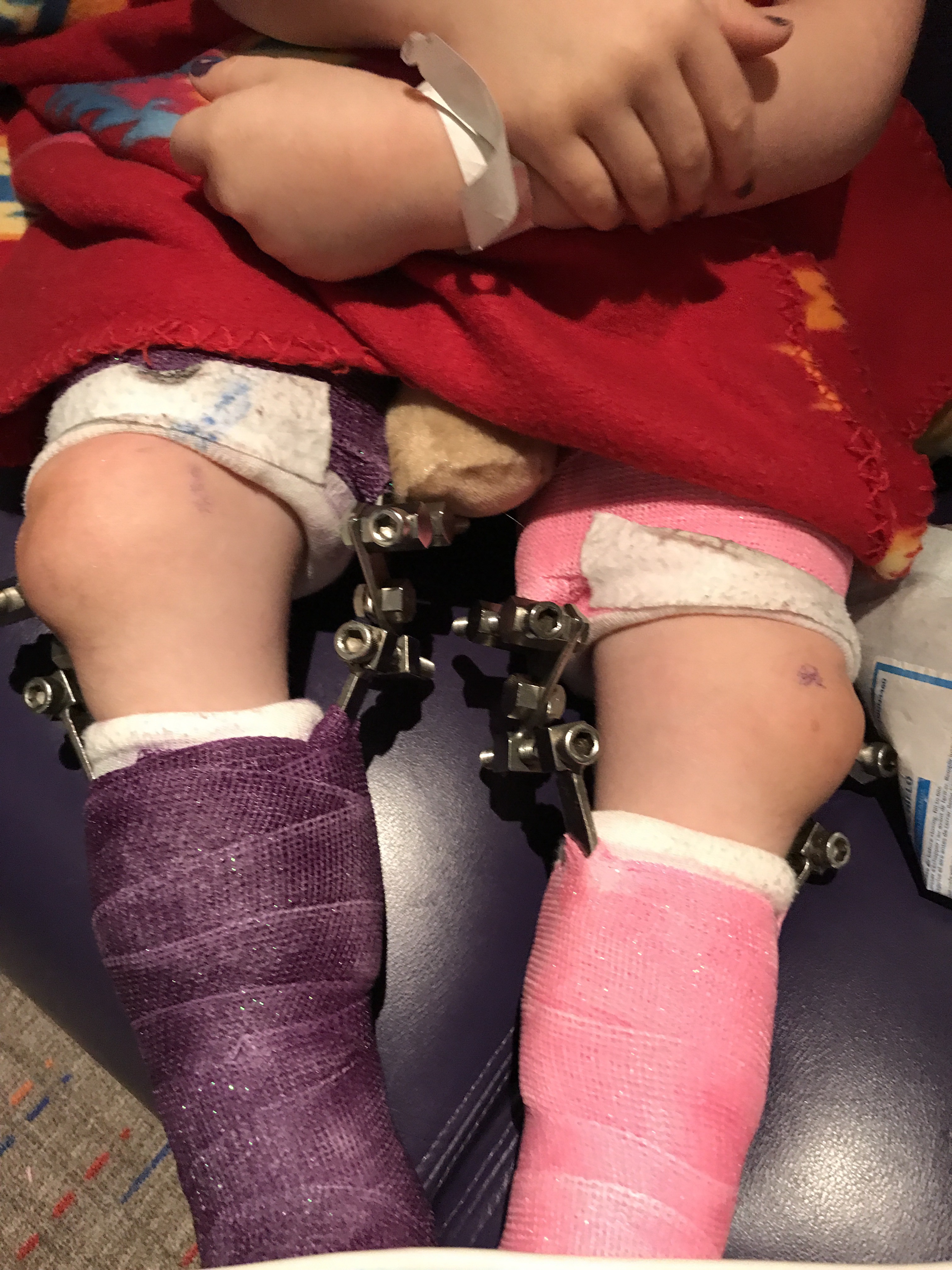
She has also decided through all of this that she HATES taking medicine. Apparently, the Tylenol that is provided through the hospital is commonly known by Scottish Rite patients as the nastiest substance known to mankind! She would rather be in pain than taste it! 😂😂. We went and bought our own in a different flavor so that she would take it, along with ibuprofen as needed. Still, every time the nurse asks if she is in pain, she says “no,” even if she is hurting. Then when the nurse leaves, Helena will go on about how she hates the casts and wants them off. She is a tough (and extremely stubborn) little thing. Sometimes that makes her a little hard to deal with! We have resorted to bribery in various forms.
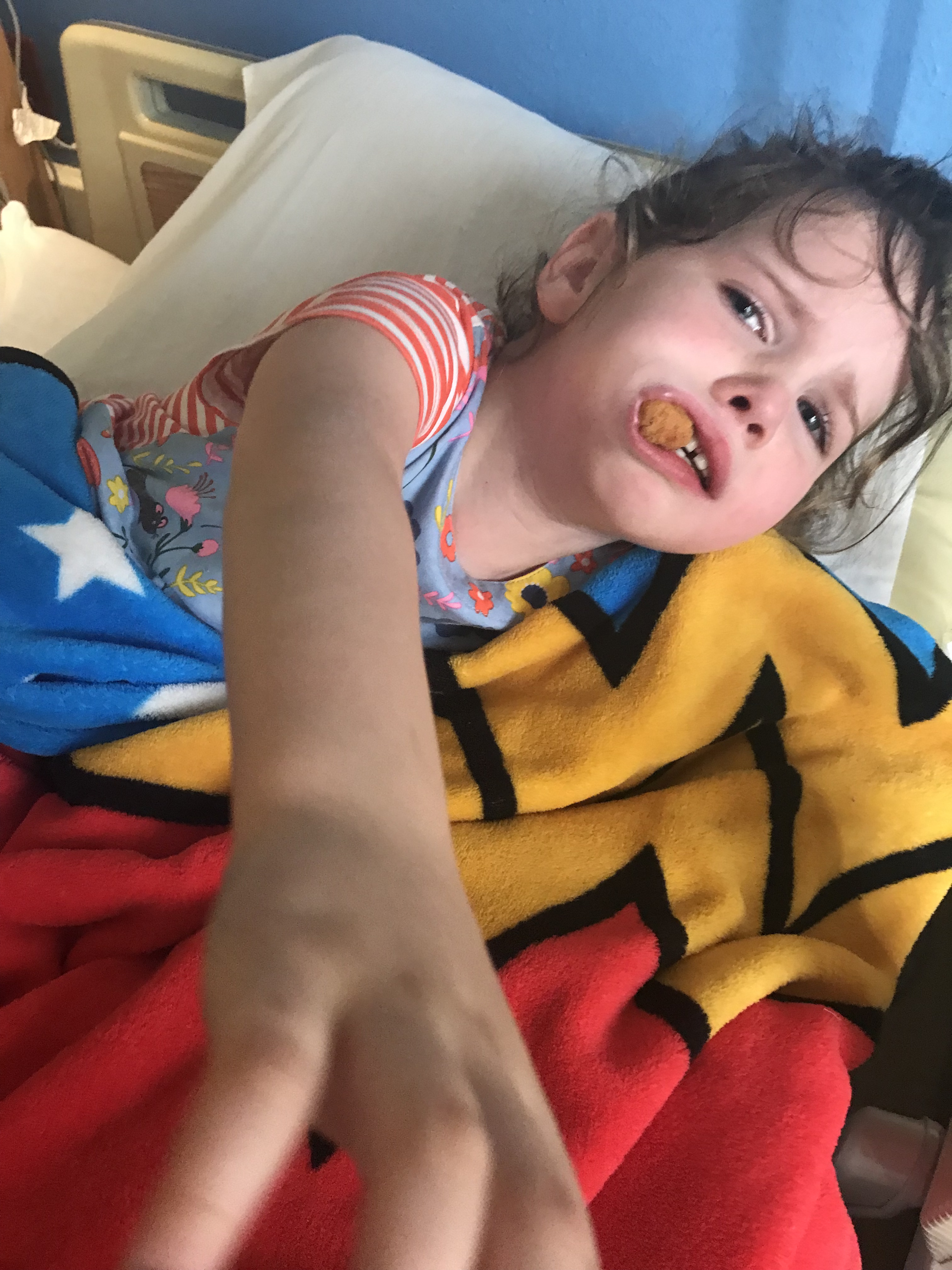
Probably the biggest complaint she had the first day or so was not being able to move as freely as she had been with her KAFOs. She wanted to stand and move around as she had been doing. We got her a pair of cast shoes and she was able to do that when she wanted.

The first three days of turning the bolts on the hinges were also relatively easy. But since Saturday, the turns have become much more uncomfortable. On Sunday evening, she had a terrible time sleeping to the point that she continually woke up wailing and screaming. The night nurse had the doctor on call come in and check her casts. She has developed a lot of pressure above the front of her knees, especially the left one. Nonetheless, the pressure appeared to be normal, so we continued.
Helena continued to complain throughout the day yesterday, and hasn’t eaten much. The doctor halved her turns in the morning, and did not turn the right leg at all last night. Today, she slept much better, and the doctor decided that she would like to reapply her cast and check for pressure sores – and that since her left leg is extended fully, she will go ahead and apply a hard cast on that one. (Yea!). Hopefully, these changes will help her be a little more comfortable.
With the pain being the way it is right now, she keeps telling us and the doctor, “I don’t want these on my legs. I want my normal legs. Mommy, please take these things off.” As a mom, these words are hard to hear. The ordeal seems pretty impossible right now. This is hard stuff to handle for a four year old child, let alone a mom. But we all know that if she can have straight legs, it will be so worth the momentary discomfort.
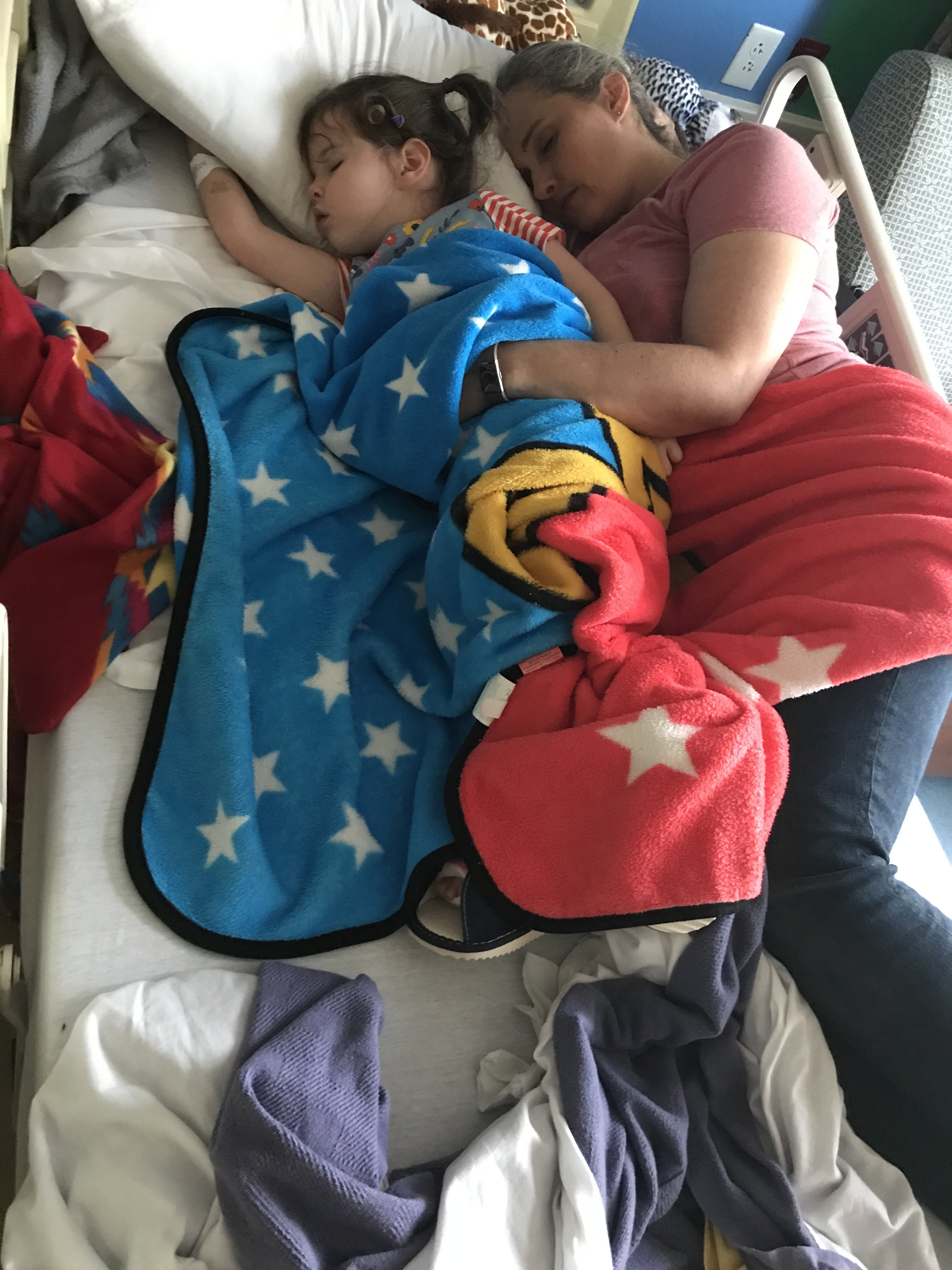
I keep telling her how strong she is – and her response is, “No I’m not. See? I don’t have bumps.” (Meaning muscles in her arms). I’ve tried to explain to her that sometimes being strong doesn’t mean big muscles but instead big courage- she doesn’t quite understand that concept.

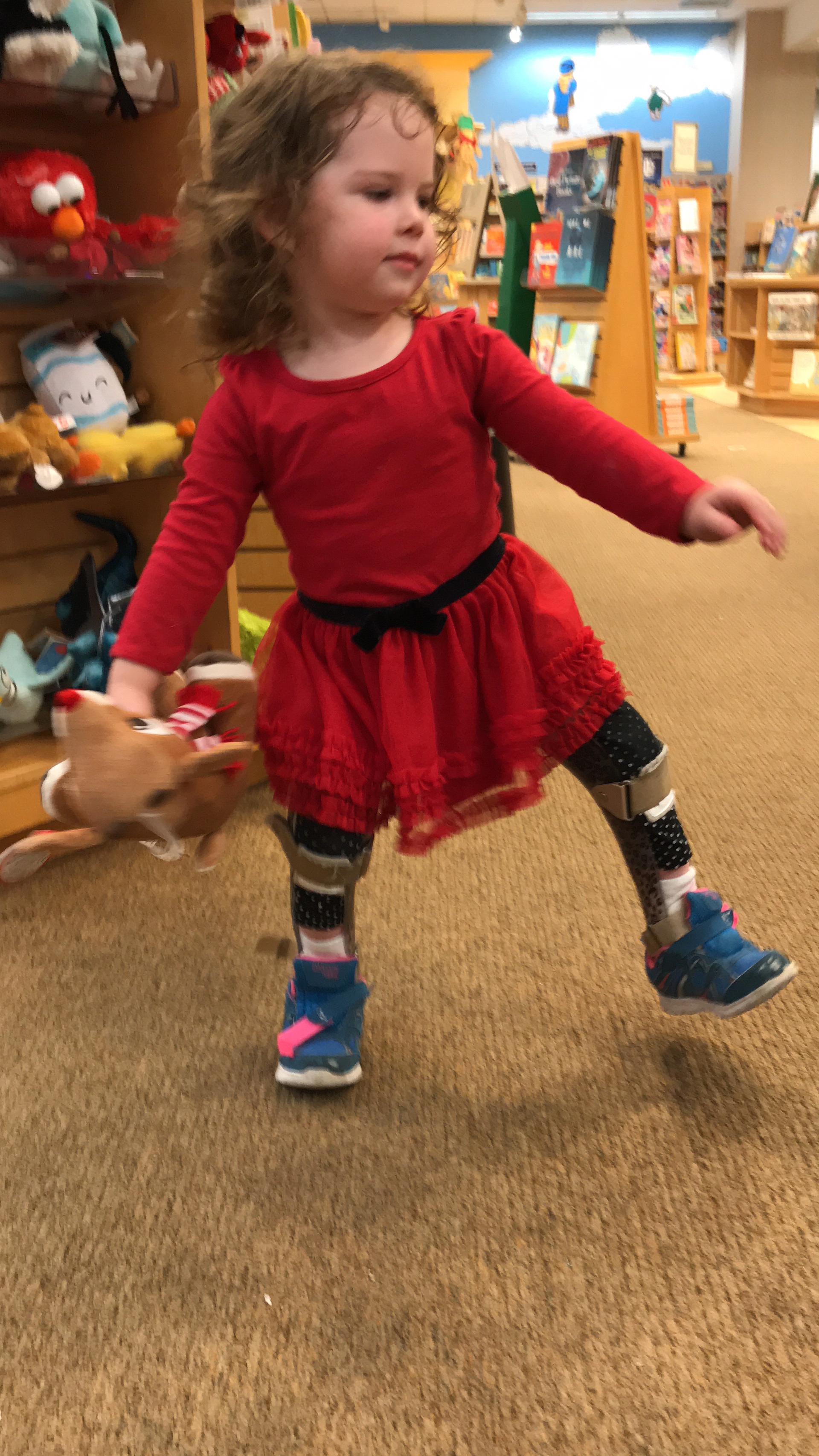
But as you can see, it is very clear that we have come a long way from her first year – and you don’t have to know what courage is to have it. In fact, she has a lot to teach the world about what it means to be strong.
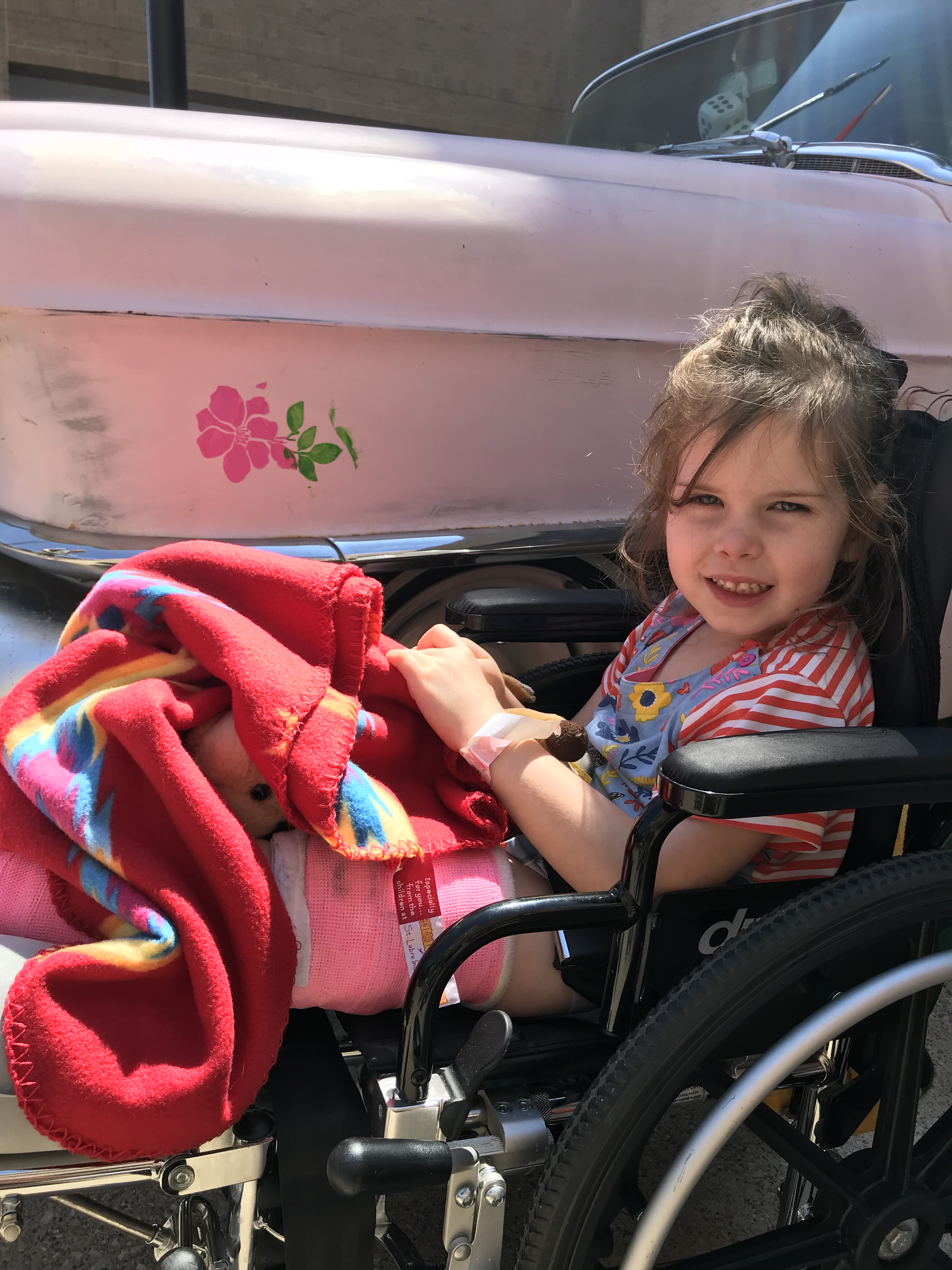
Helena Update
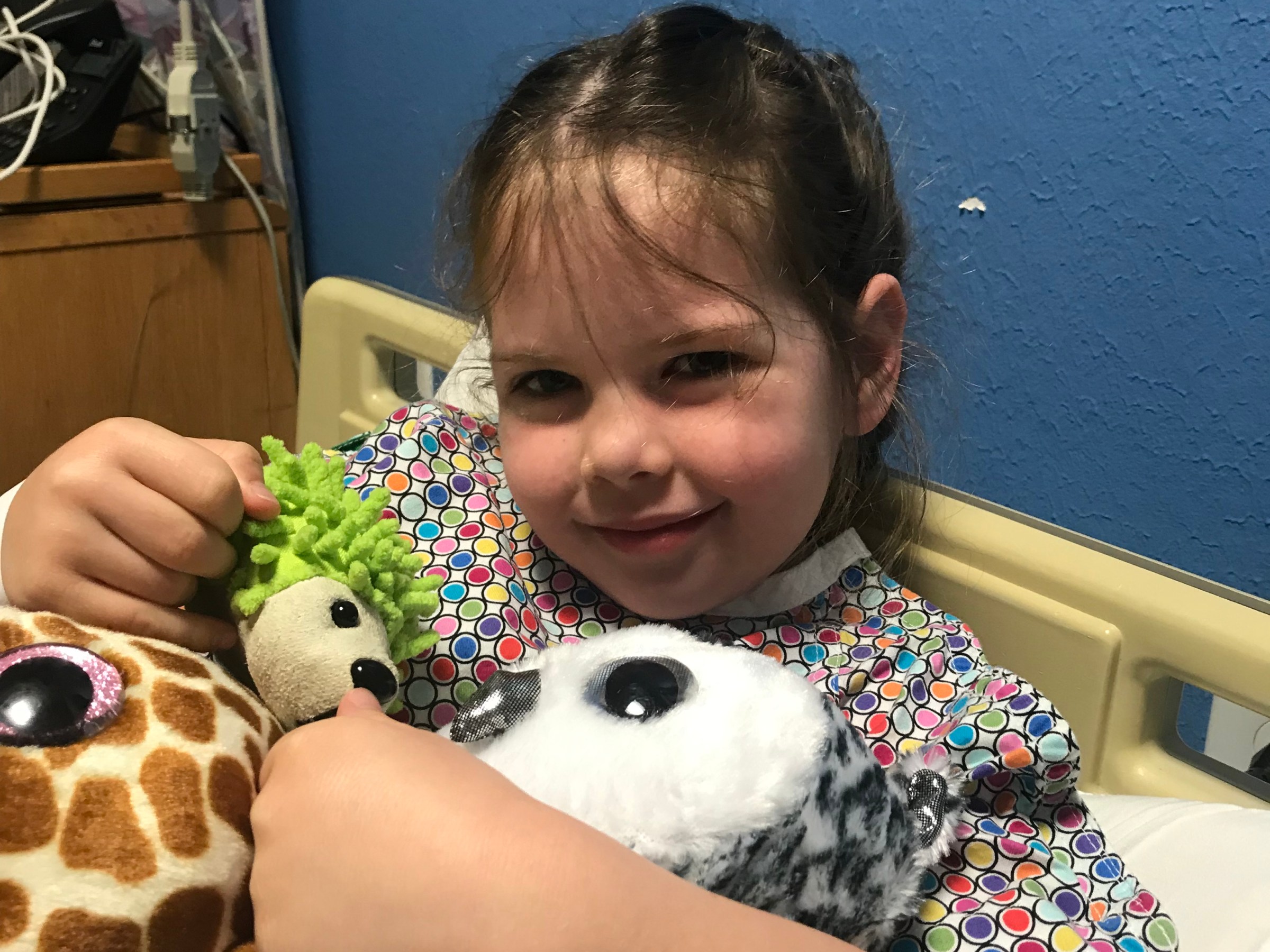
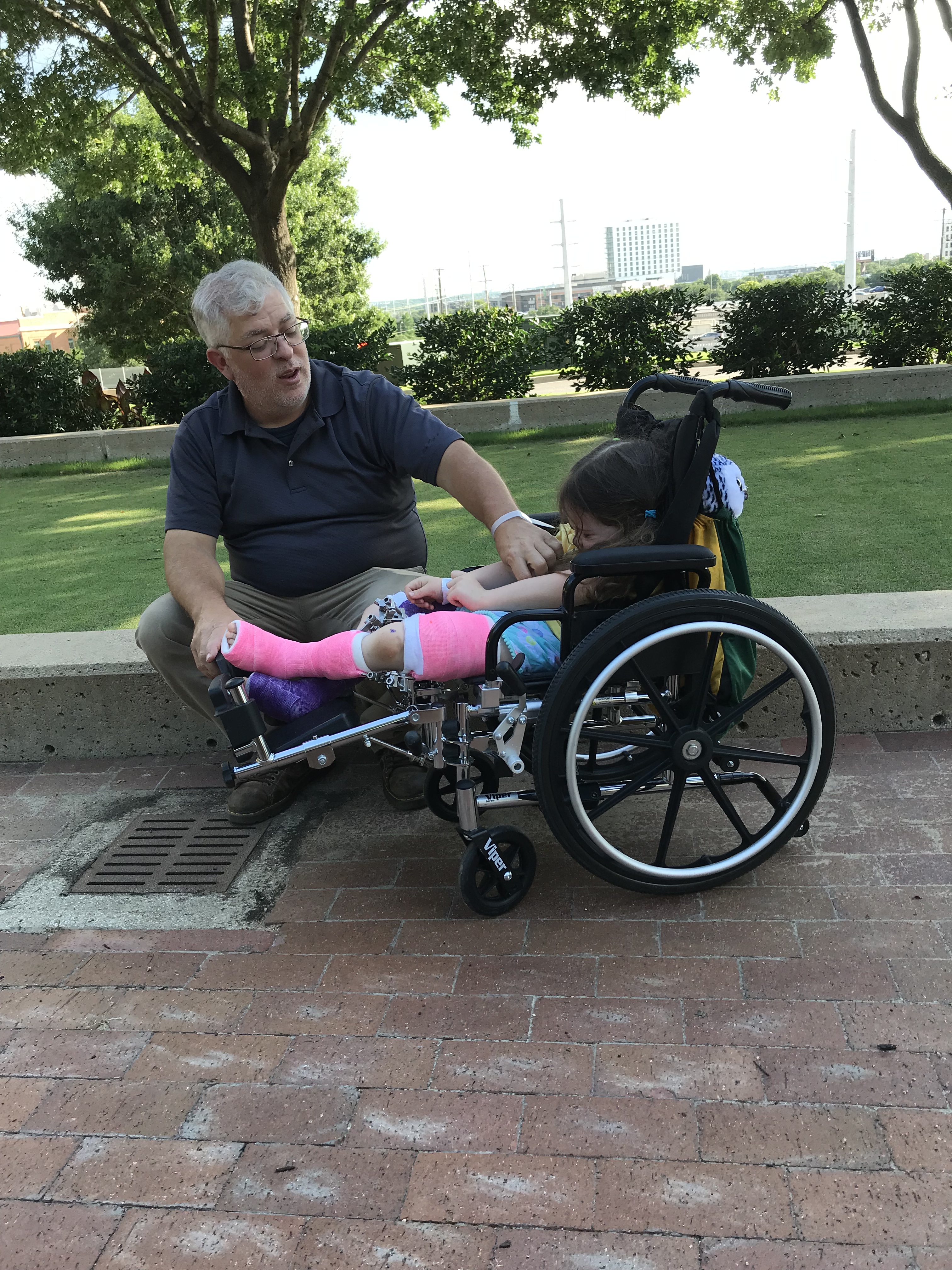
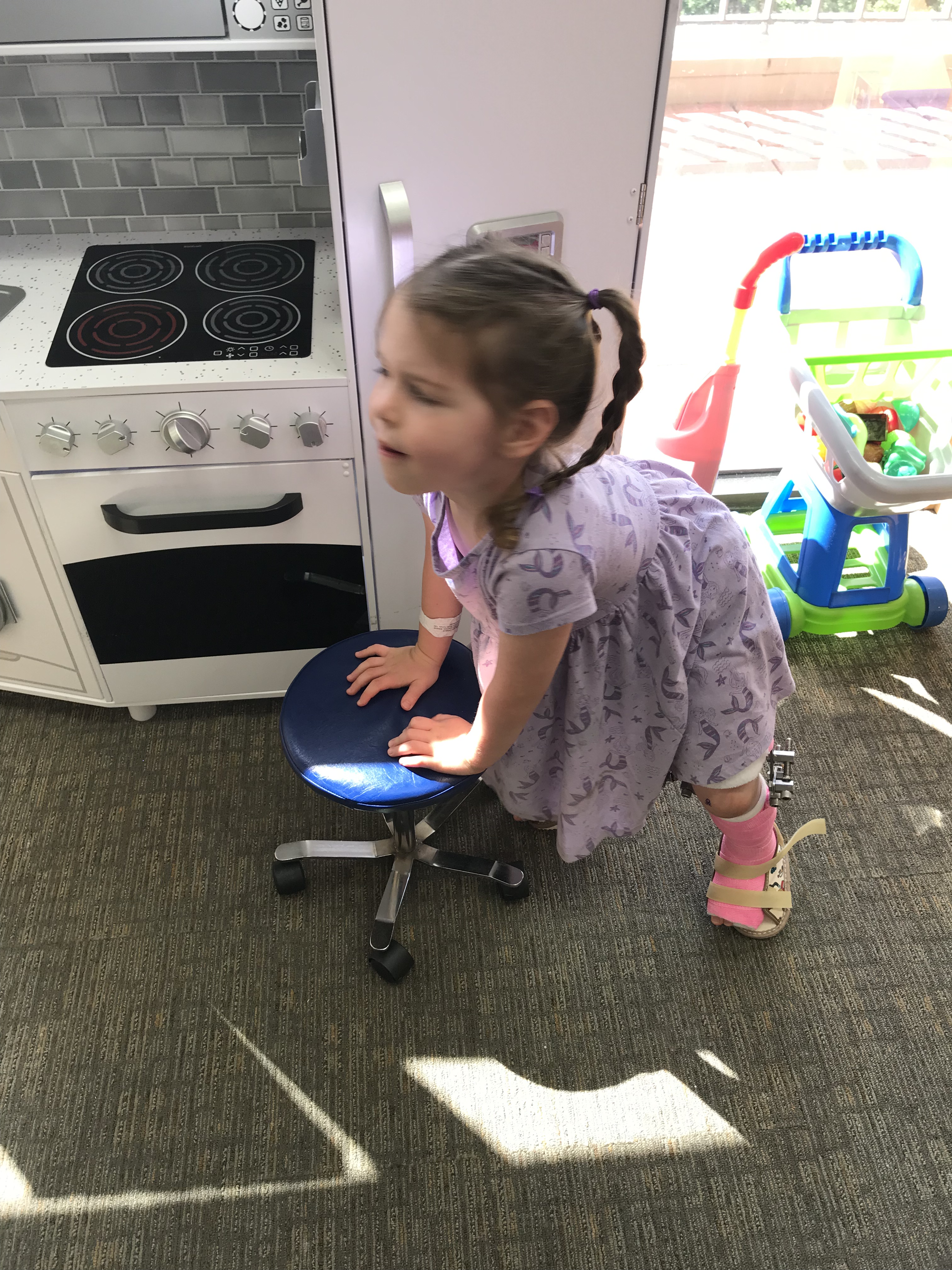
On Wednesday, Helena had Quengel Casts put on both legs. She is doing well, but is starting to feel the stretching. Here are a few of photos. I plan to post something longer when I get the chance. 🙂


You Can Do This

Last weekend, we spent Saturday trying to wrap up some garden tasks in order to leave it in other capable hands while I’m gone. It was a beautiful day, but very hot! Also – a couple of my helpers were missing.
Helena loves going to the farm, but has to stay inside and away from mosquitos, chiggers, ants, and other biting and stinging pests so that she will have no bites, rashes, or marks on her legs when she gets her casts (today). Until recently, her time spent there has been on pallets set up under the pecan tree canopies. A couple of months ago, Stuart got an idea about getting her a 4-wheeler.
At first, I absolutely hated the idea. I have known too many kids who have been injured riding on atv’s and didn’t want to risk it. Stuart, however, insisted that I keep an open mind. He soon found one with a governor that would keep the speed slow enough for her to control the 4-wheeler in order to explore the farm independently. So I gave in and told Stuart he could get her that one.
When it arrived, Stuart spent a little time figuring out how to use it himself, then trained Helena to drive it. I remember shaking my head as I left the farm to run errands as she was stuttering all around with quirky movement. Start, stop…start, stop… and the turning was so difficult. It seemed like the 4-wheeler was going to be a little too heavy for her to control, and I wondered if we had made a mistake.
Helena, on the contrary, persisted. She practiced and practiced, and when it was hard, she kept going. Stuart overheard her talking to herself. She said, “Helena, you can do this!” and she kept practicing. . By the time I got back from my errands a couple of hours later, this was what I saw:
One thing that many people don’t realize is that children born with a disability don’t have an awareness that they are different until someone points it out. The disability is their personal norm and something they have never lived without. So they figure out how to compensate through trial and error. We all have those types of things, don’t we? And yet so often, we stop just short of our goals because they seem unattainable. Persistence is not easy — but when we stick with a challenge (and rely on God’s strength), there is literally nothing we can’t do.

 Without a Paddle
Recent Comments