Without a Paddle
Ponderings of an Uncommon Life
Now and Later

Not too long ago, Helena, Rebecca and I drove home from an outing to Baylor and Helena started to wail.
“Mommy, I wish you had never let them put those casts on my legs. These aren’t my legs – I will never have my ‘normal’ legs again.”
I reminded her, as I had many times over the summer, “Helena, remember that right now you may not be happy, but later, you will be very glad that we straightened them.”
“No I won’t be happy – these aren’t even my legs. Just look at them- they aren’t even all the way straight! I wish you had never let them put those casts on my legs. I am so mad at you!”
At that time, Helena had only been out of her casts for 3 weeks, and was still adjusting to the new braces. One leg is still slightly bent – it will require some surgery if we want to completely straighten it. She doesn’t know this – but she can see it is bent with her eyes and has made sure to point it out. She also still had a pressure wound on one foot that was having trouble healing.
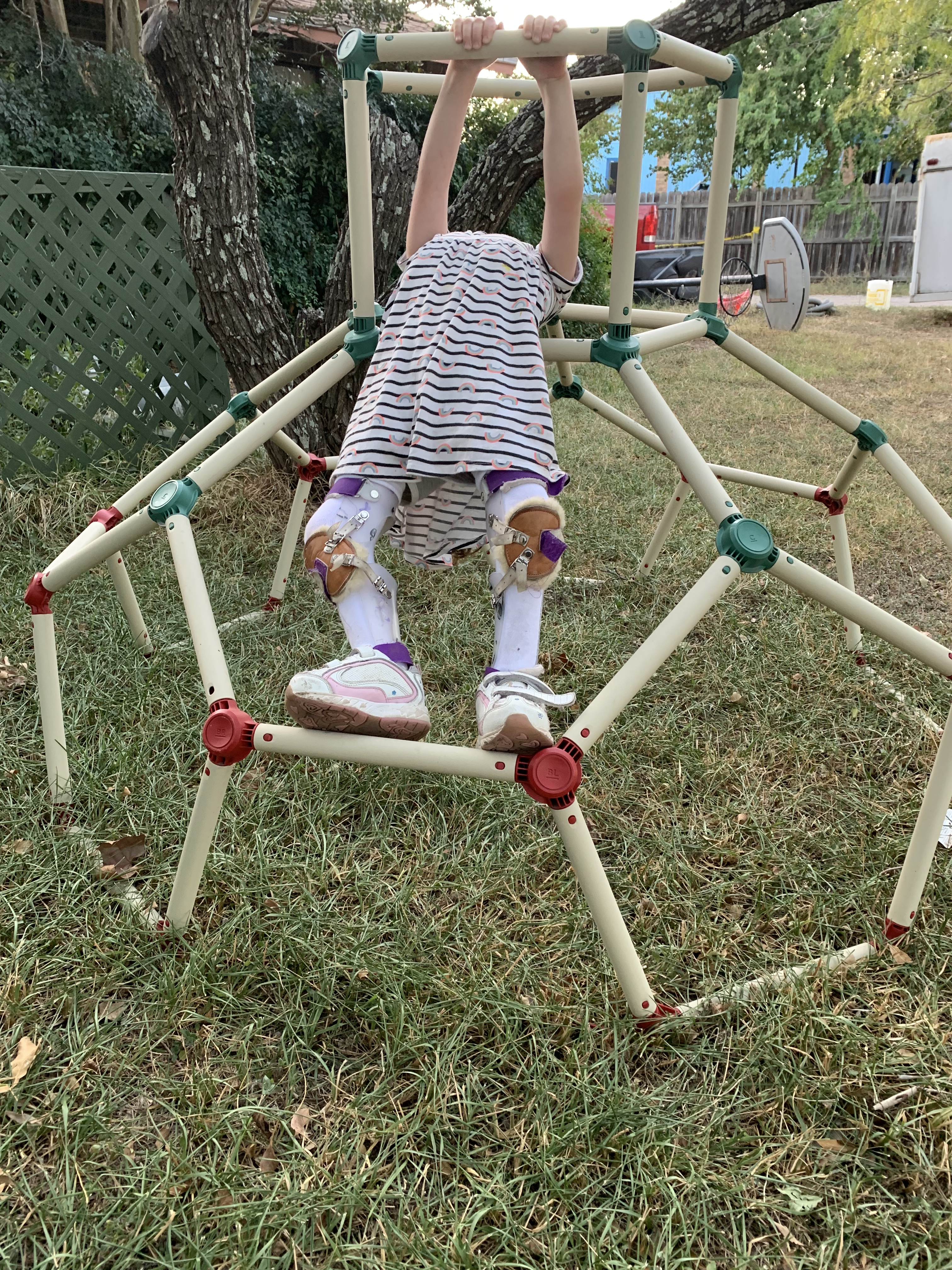
At that time, the longer the braces were off, the harder they were to put back on. Helena has to leave her braces on for most of the time (22 hours per day) so that her legs don’t regress back to their original contractures. Over time, her legs should adjust to the new norm and she should be able to sleep without the braces or splints.
She will most likely always need some sort of bracing. And our decisions on which procedures to participate in will always be based on what will provide her with the best quality of life.
Parenting Through Difficult Moments
Parenting is so often difficult. Many times, our decisions may not work out the way we’d hoped, and may even complicate matters. If, however, choices are made with the best interests of others at heart, the long term rewards could far outweigh any current struggle. Stuart and I have had to spend a lot of time contemplating what’s best for Helena, and a lot of time just praying for wisdom. Helena’s condition comes with a lot of decisions that have no absolute answers, so we often find ourselves mulling over decisions.
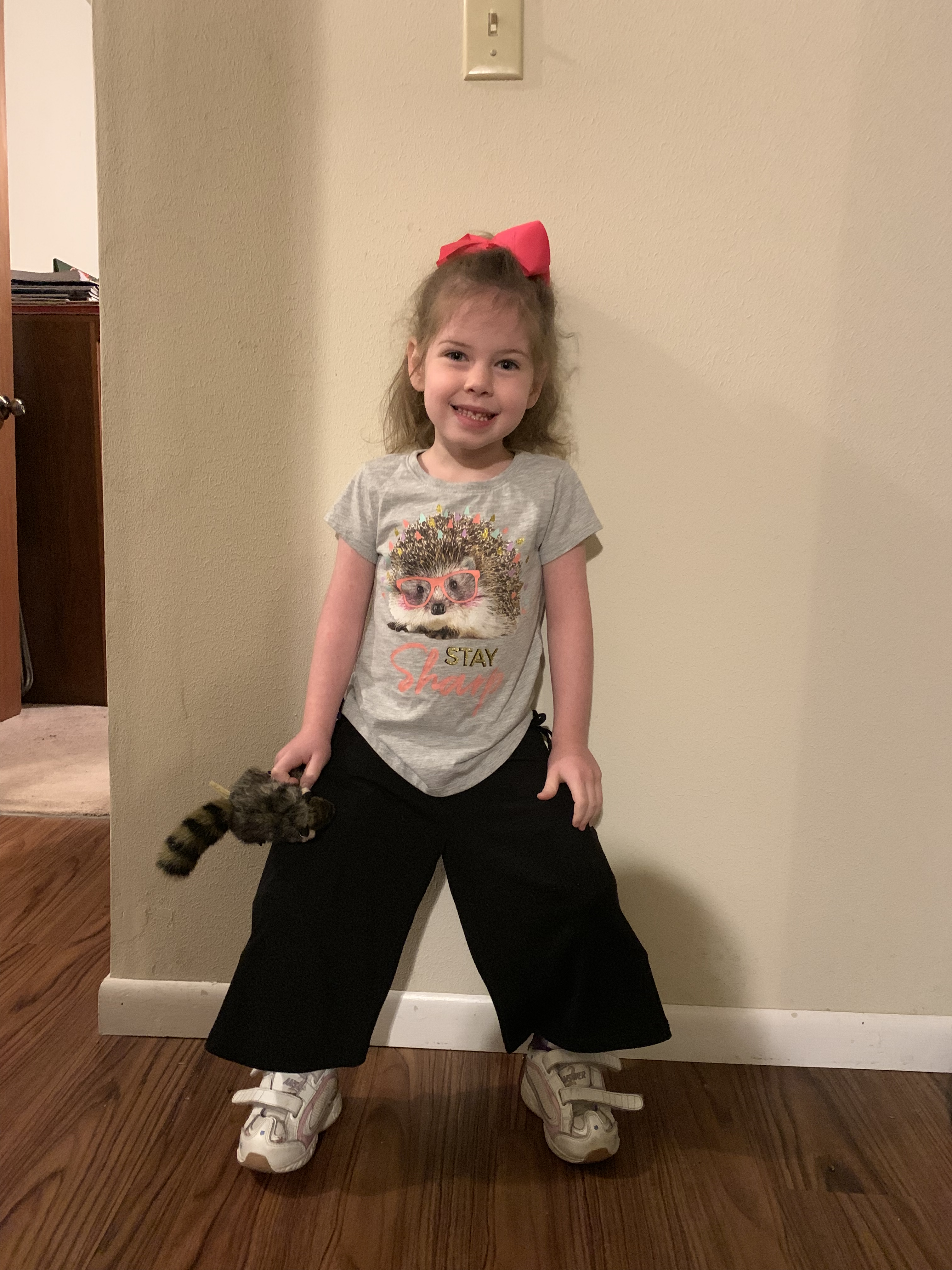
Just last week…
It has now been almost 10 weeks since her casts finally came off.
Her strength is building up and as she does more, she is building stamina. Her pressure wound is now just a scar on the back of her foot that she still shows me from time to time. There are times when she is very tired at the end of the school day- and she still will say “Mama, I wish you hadn’t of let them do that to my legs.” And then there are days like last Thursday.
I finished my school work up and was getting ready to leave. Helena decided to sneak out the door of my classroom as I spoke with a teacher outside my room and disappeared down the hallway.
“She is gone!” said another friend with a smile as I looked down the hall to spot her. As I went around the other side, I heard Helena. “Can’t catch me!”
She ran in her way down the hall and hooked a right turn. I actually had to chase her out of the school to catch her. Once I got her back into the school, she caught a second wind and decided to try it again!
Her escape stunt made me so mad! And yet, it is amazing how far we have come since the beginning of June when we had wedge heeled braces and no ability to “run” at all.
Like Mother, Like Daughter
School has been back in session for a few weeks now. This year, I have Helena attending Pre-K on my campus. It has been such a treat to have her there! She has a wonderful teacher and class, and she has been excited to go every day. It has been a fun year, so far!
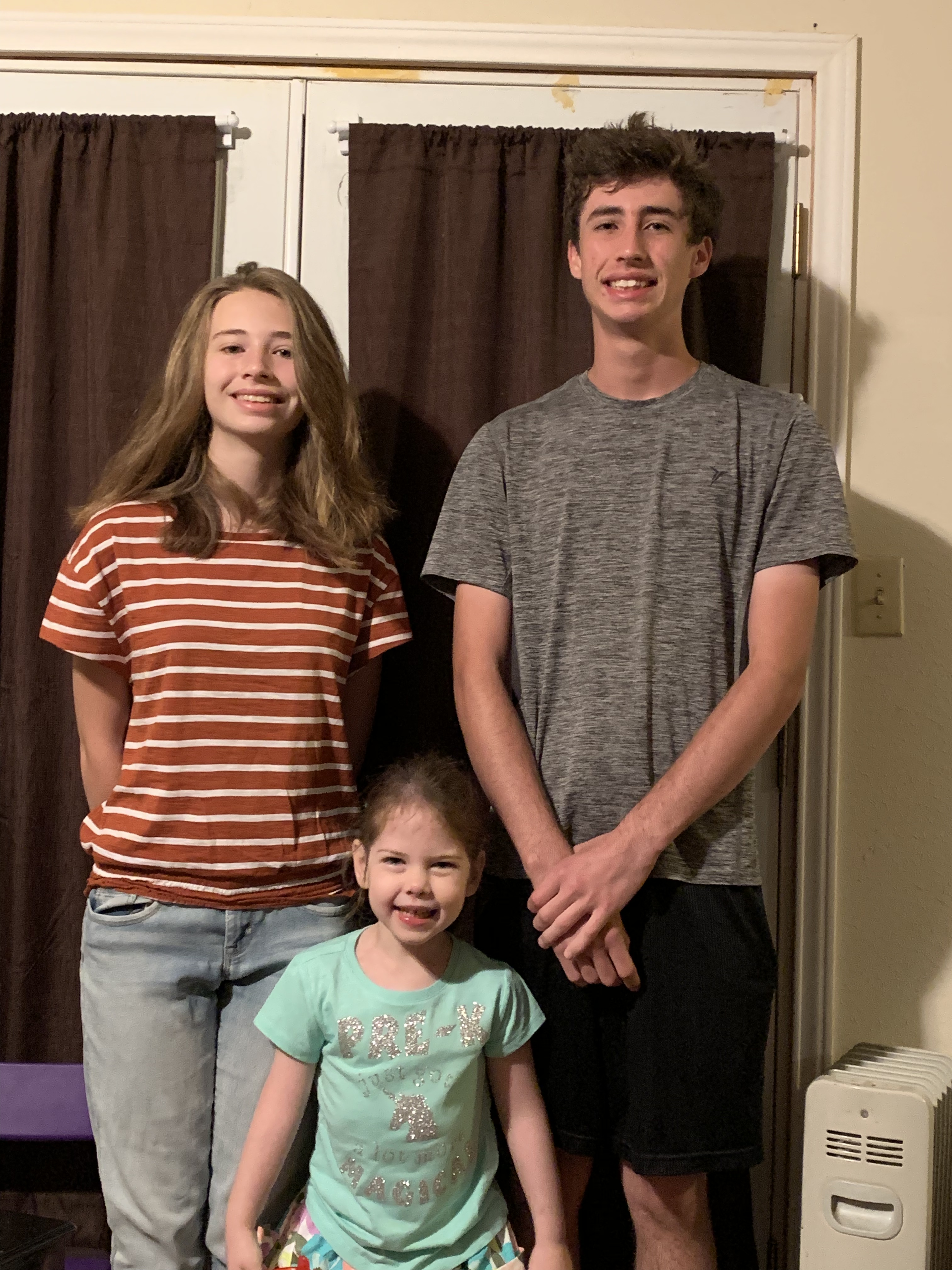
Until this year, Helena has not had to navigate a facility that was much larger than a house.The school where I work currently has over 500 students. Because of the size of the campus, Helena is facing new challenges of endurance.
During the first two days of school, she used her walker to move from one side of campus to the other and seemed to me like she was doing it easily. But by day 3, she started showing signs of fatigue in the afternoons and after school. By the time we are ready to leave the school, she can’t or won’t walk out of the building.
We have since then been watching her in order to incorporate her wheelchair into her day so that she doesn’t waste energy needlessly. For the first time, we are addressing how to prioritize tasks so that she doesn’t wear out so that she can maximize her ability to move independently.

Helena does not particularly like her wheelchair. She wants to do things for herself, and will often tell you so. I will sometimes get frustrated with her because she will stubbornly refuse to use her walker or the chair, I will get all of our stuff together to leave or go somewhere, and then she will change her mind, necessitating a major shift in how I am carrying things or moving her around. Our major arguments occur over independence and when she feels she has been unfairly limited. Helena will frequently wear out, throws some sort of huge fit, and then realize that she needed the help that was originally offered.
Another challenge we have faced for a long time has been with eating. Helena likes to play. She doesn’t seem to have time to stop and eat (unless it is something sweet.) We have always worked hard at getting her to eat nutritious foods – but even more than usual, we have been taking steps to make sure she eats at regular intervals – because Helena misbehaves when she is hungry or has eaten too much sugar. We even have a special term for how she behaves after she eats something with a lot of sugar – we call it “sugar brain.”
When Helena is tired, not wanting to eat properly, or even when she faces a challenge, she will often try to brush it off. “I’m okay, I’m okay.”
Sometimes these words demonstrate grit and toughness. I am okay with this – and plan to post on this use of those words in the future. But at other times, the words “I’m okay” are a denial of the need for help, and it becomes a problem.
She says “I’m okay” when she falls to assure us she can get back up (the grit). We also heard it often in the hospital when she didn’t want to take her medicine – even though she was clearly in a lot of pain and needed medicine. She says it often when she doesn’t want help but you know she probably should have it. You hear it when she wants to play in the bathroom and trouble is brewing! Whether or not she admits it – sometimes, she does need help. She needs to be encouraged, she needs guidance, and she needs to accept her medicine.
As we all do.
With any disability, there are obvious limitations, and whether one may like it or not, they need to accept some help. Allowing others to help is hard for Helena sometimes – she wants to be like everyone else. And yet help very often results in closer relationships, innovative solutions, and understanding how to prioritize our activities in order to more effectively live life.
Many of us struggle with this.
As an adult, I often struggle in the same way as Helena! I have been realizing that personally, I need to do some things differently to maximize my energy and lower my levels of stress. I need to exercise, and I need to take some pressure off of myself and try to live more effectively. I especially need to remember to trust God with the unknown – he is really the one in control. And I am one big worrier.

I will tell myself (and others) “I’m okay.” But many times, I say this when I struggle. When I am unwilling to do what will help me improve my health, I will gloss over the necessity of making improvements, and when I am upset about a situation, I make excuses rather than creating solutions.
When I have things in my personal life that I am unhappy or concerned about, I don’t discuss these things with anyone. I know better, but often I behave as if these problems are best solved by worrying and fretting over the situation. As many of us do, I tend to bury myself into my cell phone or other media, trying to escape, or sometimes just searching for solutions that are easy fixes.
I need to trust God and listen to Him for the solutions I need. I need His help.
In this case, the apple does not fall far from the tree. Helena and I both like to take care of things on our own. And both of us sometimes need to acknowledge our helplessness and accept the help that is so generously offered to us.
In accepting help, one finds strength, relationship, and very often – rest.

What Happened to Her?
From the very first day, we have known that parenting a child like Helena would be a little different from parenting our other children. Because of her disability, we have had to adapt to a different way of viewing the world. One of the ways in which we have had to adapt is by having to choose how to respond when people outside of our tight-knit family interact with us. We often deal with confusion, pity, curiosity, and ignorance.

I have found that we have responded to these types of situations in a variety of ways.
1. Advocating
Because of Helena’s condition, we have to spend a lot of time interacting with caregivers. Many if not most caregivers have not even heard of arthrogryposis. We have had to spell it for most nurses we interact with. We have had to educate medical professionals on the condition prior to general treatment. We have had to change doctors due to differing advice, and sometimes, simply to make her treatment plan more in line with how we want her to experience life.
Of those who do know what the condition is, most are very surprised at Helena’s ability level. They expect her to be very weak, very dependent on others, often making false assumptions about her level of disability.
Even among AMCers, every child is very unique and some are more severely affected than others. Arthrogryposis is an umbrella condition with many causes. There are approximately 1 in every 3,000 births born with Arthrogryposis. Some types of Arthrogryposis are actually closer to 1 in 10,000 births. The condition is considered an orphan condition, which means that it affects fewer than 200,000 people nationwide.
Statistically, people born with arthrogryposis and survive past birth usually have above average intelligence. I believe this is because they have to come up with their own ways to be independent from the earliest moments of their lives. They utilize critical thinking from a very early age.
There are many questions in medicine that are not answered, and arthrogryposis is one condition that is not well understood. This means that we are often pioneering in the medical realm and have to decide for ourselves how to best advocate for Helena.
2. Ignoring
There are often kids in places like the grocery store who want to ask us questions while their mother quickly whisks them away so she isn’t embarrassed by them. There have been long lines of kids on a field trip who one by one take a stare as they pass. There have been numerous people who, appearing to assume the worst, stare at her casts from afar and glance to others to indicate their pity or disapproval. There have been kids at the park who seem to enjoy playing at first, but when they notice her physical difference, think up ways to distance themselves from her. (But it is always interesting to see how she is able to keep up pace. She is a leader – one of my relatives recently called her an Alpha female. This is true!)
Ignoring in these scenarios has worked for most of the last five years. We have tried to stay so focused on our enjoyment of each other that we either don’t notice the staring – or can distract ourselves from it. Despite its success for us, however, it has become less effective. While in Scottish Rite Hospital for treatment, we took Helena to the Perot Museum in Dallas. We went at 4:00 p.m. the first day and it closes at 5 p.m., so we we had to make another visit the next day to see the rest of the museum. On the first day, while we were in the elevator with another family, I noticed Helena covering up her hinged knee.
“What’s wrong with your knee Helena?” I asked her.
“It just hurts,” she replied.
The next day when we returned, we were on the elevator with other people again. I look at her and she once again had her knee covered up. Then it occurred to me what was actually going on.
“Helena, why are you hiding your knee?” I whispered.
“Because I don’t want anyone to look at it,” she replied.

I later replied to her that her knee was beautiful the way it was, that she was special and she shouldn’t worry about others looking. But deep down, I knew that was not a response that is any way satisfying to her. I haven’t quite figured out what I should say to embolden her in times like these. Ignoring has been a response that has worked for us as adults- but if it is Helena, this isn’t so easy – she notices, even if we are ignoring the stares. So we will have to find new ways to handle it.
3. Explaining
We often get questions or probing comments about Helena’s legs, so we feel that we have to do a lot of explaining to complete strangers. Interestingly enough, these questions most frequently come when she is most able – in braces, casts, or using adaptive equipment. When she has no braces on and we have to carry her everywhere, no one asks us about her disability at all. (She is almost 5 years old and this would mean we are carrying her If she is not using adaptive equipment. Is that not unusual?) People only notice when something is vastly different from the norm.
There are lots of questions we hear, but the most frequent question we hear from people is ”What happened to her?” I struggle with this question the most of any question asked. First of all, whether or not it is intended, it implies that there must be fault somewhere. I always answer with a polite answer to educate people on her condition, but the question always saddens me a bit.
Do things always have to be someone’s fault? And whose business is the fault anyway if it were? Sometimes, things just are what they are and nothing “happened.”
The second reason this question bothers me a little is that the question is a reminder that how she acquired her condition is something that can’t be answered – and can’t control. We will probably go the rest of our lives and never know why Helena has Arthrogryposis.
I once thought I understood the reasoning from a scientific viewpoint. I had heard a presentation on the condition at the annual Arthrogryposis Conference about how delayed anterior horn cell activity can cause the condition, and that the length of the delay causes the severity. This theory made perfect sense to me, so I felt sure that this was our explanation of “what happened.”
Last Fall, however, we had a child neurologist run an EMG on her to rule out any other conditions she might have. That test indicated that while she still has the Arthrogryposis condition as her label, the anterior horn cells were working normally and probably not the cause of her condition . Therefore, the most logical explanation no longer fits.
We sometimes have to be okay with the unknown, and Helena’s condition is a daily reminder of this. What we do know is that Helena is uniquely designed by God for a very special purpose. Our role as parents is to prepare her for her purpose, not worry about things we can’t control.
4. Educating
At least one time out of three, the curious kid at the grocery store gets his question out before mom whisks him away. I always take the time to answer these kids in developmentally appropriate language- and have beenDr training Helena to do so when she is ready. Usually, parents are relieved with my response and we have a nice conversation. A couple of weeks ago, for instance, we met a Pentecostal family with 5 little girls. I found it curious that their mother had the same initial reaction of trying to hush her kids – and the same sense of relief when we interacted. These kids live their lives daily as being “set apart” – with dress and conventions that are sometimes quite different from modern culture. These kids should be accustomed to living with visible differences, but there are always new scenarios in which one is challenged to realize that every person’s norm is different.

I then got to thinking about how when we were staying at Ronald McDonald House, I had the same response at times when Helena would ask me about other children staying there. I understand from both perspectives the difficulty that curiosity can present. In those times, I asked Helena to try to wait and ask me privately – and to always try to be kind and friendly to the child when she saw them or interacted.
From a personal perspective, I would much rather a person be friendly and politely inquire about her condition than whisk their child away In embarrassment. Not all parents of differently abled kids are necessarily going to feel that way, mind you, and I think many times people are becoming too informal with their comments and questions. Even so, I prefer to clear the air.
For me, it is more of a relief to not have to explain to Helena why someone rushed their child off so quickly instead of being friendly. The Golden Rule could be applied here – how would you want someone to interact with your differently abled child? Would you want a parent to rush their child off to avoid asking them questions? If you live a daily reality with a disability, is there anything that another child would remind you of that you aren’t already dealing with every second of the day? If you feel your child’s behavior may potentially embarrass you, what skills can you teach your child to prevent that scenario?
Wouldn’t it be refreshing to see another person’s child demonstrate kindness and empathy toward your child – and even treat them as a new friend, rather than rush away due to fear of the unknown?

As we have progressed through the current casting experience, we have been brainstorming ideas that might make these interactions a little easier for Helena. Awareness always helps. We will continue on this journey as a family – through these casts and beyond. As we go, we will have to continually figure out ways to address questions about disability – and teach others about showing acceptance.
AMC Awareness Day
Today is AMC Awareness Day! We are wearing our blue to support Arthrogryposis Awareness! For more information on the condition, go to:
About Arthrogryposis

#AMCAwareness
#BlueforAMC
Helena’s Last View Out the Window

We get to go home for a while! Check out those glittery casts. Helena’s doctor loves her sooo much!
 Without a Paddle
Recent Comments