Without a Paddle
Ponderings of an Uncommon Life
Planting Seeds
“The seeds of resilience are planted in the way we process the negative events in our lives.” — Sheryl Sandberg
Today, Helena and I headed into the garden to plant some flowers. It has been a challenging few days. Helena has the capacity to inspire through her determination – and she also has the capacity to drive me to extreme frustration. She can at times be very naughty.

The past few days have been naughty days, with screaming, tantrum throwing, mocking, and defiance. There is usually something behind those behaviors – which often leads other people to say to me “who can blame her?” But we know that not holding her accountable for bad behavior won’t help her be independent and just leads to more naughty behavior. Helena was born in the image of God. She should be raised to stand on her own and be accountable for her actions. I believe her uniqueness is creative perfection to God.
As I approached the garden Helena sat on a step and waited for me. She had been thinking about some things and was ready to vent a little.
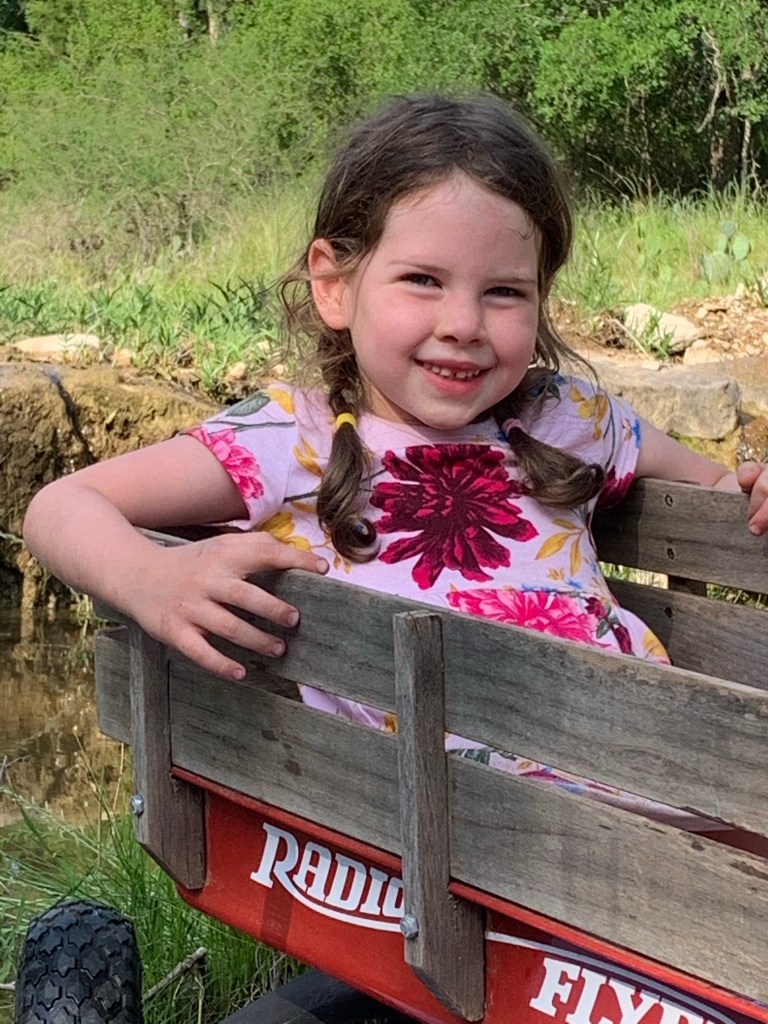
“Mama, I don’t like having a disability. I am the only one with a disability at my school. There is no one like me. I just want to be like everyone else.”
We have had this conversation a few times – and each time, I am speechless. How do you comfort a child living with a life long disability that you have never faced yourself?
I answered the best I could. “I am so sorry you are feeling sad about that and I know that sometimes it must be so hard. One thing you need to know is that you are so, so special. You are my sweet Helena, and there is no one else like you. God made you special, and you are the only one who can fill your special place on this earth.”
“I know my special place. I am going to learn about people’s bodies and how to help them get better,” she said.
“Oh – so you want to be a doctor?”
“No, Mom- I’m going to be a scientist. And I am going to study viruses so I can help them get better when there is an illness like we have here right now.”
Helena has for a while now been saying that she is a scientist. One time, I said something about her wanting to be a scientist. Her reply was “Mom, I don’t want to be one. I am one.”
On another occasion, Helena told her daddy that she didn’t need him to teach her something because she was a scientist and already knew everything. Stuart said, “Helena – scientists don’t become scientists because they know everything. They are scientists because they know they DON’T know everything.”
As Helena and I continued talking about her feelings in the garden, she revealed a whole plethora of concerns. She has been anxious.
“Why did God make the virus?”
“Did bad people make the virus?”
“Why would God make bad viruses or bad people?”
“What if you get sick with the virus? I don’t want anything to happen to you mama!”
We talked about these things – and we talked about God, His gift to all of us through Jesus, and what Heaven might look like. Helena had a hard time believing Heaven could be more beautiful than the farm we were sitting in. Then – we prayed for all of our concerns.
After that, we planted seeds. We watered them. And we both felt a little better. There is just something about a garden.
I am blessed beyond measure to get to watch it all grow.
God is Enough
When it seems as if you have done as much as you can, but it isn’t enough
God is enough.
When it feels like the world is crashing down on you
God will carry it’s weight.
When it seems as though everyone is against you
God is for you.
When you think you are alone
God is there.
When you consider yourself a failure
God will direct you toward His success.
When you feel your loved ones have abandoned you
God loves you.
When you know your health is failing
God has plans for your complete healing.
When you messed up and can’t make it right
God will make something beautiful from it.
God is more than enough. For you – and for me. I often forget this. We often deny it – because we live in a society that highly prizes self-sufficiency and independence.
As I raise Helena, we have taught her to prize these things, too. In order for her to fulfill her purpose, it is important for her to be self-sufficient and do all of the things she can for herself.

But if we were able to carry the weight of this world entirely on our own, there never would have been the need of a Savior. There would not have been a reason to send a sovereign God down to earth as a tiny, vulnerable baby to grow up and die on a barren wooden cross.
The world lies to us. It tells us we should be able to handle it all – but that is false.
Our current situation is evidence of this. All of us (the whole world) are supposed to stay close to home, unless we are working in a job that is considered ‘essential.’ All of us are having to live a little differently from what we have ever experienced or remember. This situation is unlike any other we have ever experienced. We are not in control, no matter how hard we all try. We are not calling the shots this time. We can all try to fix things, but the truth in this situation is that our individual efforts are not enough.
But God is enough. He is stronger than COVID-19.
For the first time in thirty years, the Himilayas are visible in Northern India. The reason: Covid-19 closures have caused a decline in pollution to the point where they can be seen more than 100 miles away. God is trying to get our attention.
How could God allow us to be put in this situation – and why would God permit a sickness to so completely halt life for millions?
Maybe it is because we aren’t listening to him. Because we are distracted and think we have every right to do whatever we want to do – regardless of how many lives we affect.
Maybe it is because we are so busy that we barely notice the “smog” around us and we ignore our families to the point that when we are forced to be together we wonder why we chose to live such busy lives or we wonder what we ever saw in the stranger who lives with us.
Maybe God has just politely stepped aside for a bit, in order to show us our inability to handle everything, and to remind us to remember Him.
This is my prayer. That families find each other and grow closer. That businesses will start prioritizing quality of product over quantity of dollars. That lives – both those starting and those at their end will be prioritized, because ALL lives matter, and this has been a genuine tragedy for those who have lost loved ones. Finally – that society will fundamentally change for the better as a result of this trial and our response to its effects.
God is enough. He is greater than all of us. We need to listen for His voice and watch for His work around us.

When I Worry

I received some important news last week. Although I ought to actually be deriving some relief from it, I have instead been worrying about things that I can’t control. You see, the issue for which I received this news was one of my big “what if’s.”
“What if Helena’s condition was my fault?”
“What if it was a virus I was exposed to at my job, or the time I fell on a street corner in San Antonio — or the medicine for headaches I was taking before I got pregnant?” In this case the answer to all of these questions is: No. It was none of these things. Case closed. Although I have already- in most of these cases- put these questions to rest in my mind, I am glad that I will never need to wonder about these questions again. The problem is that the news I got opened up a whole new set of problems (and worries) that are not under my control.

Back in the summer, Helena, Stuart and I had blood drawn for a genetic test called whole exome sequencing. Every person on the planet has some genetic mutations in their makeup – and many diseases and conditions that run in families can be predicted or found with this testing. We are trying to determine the best course of care for Helena based on scientific evidence. If a procedure would end up with a regression back due to the cause of her condition, it is not a procedure that is worth our consideration or money.
The results for this testing came back and revealed some potential genetic causes for her condition that come from both sides of our family.
Through the same genetic information there is also a potential for cardiomyopathy – so she has been referred to a cardiologist.
Stuart is generally in awe (and aggravated) at my capacity for worrying. I can have one of the most successful moments of my life, and the next day be worried about failure. I can have a happy, wonderful experience and simultaneously be worried that I am going to fail those I love. Part of it is natural to being a woman, I think. There are plenty of books to support this natural inclination being a part of womanhood. But part of it is also my natural desire to control things. Some things simply can’t be controlled. That is where worry takes hold in my life.
How much better my life would be if I stopped trying to control what I can’t by worry and stop for a moment to think about who it is that is actually in control! Instead – I jump right into worry, forgetting the things I have learned and experienced through the most painful moments of my life.

.
I took the information about our test results in stride, at first – but then got curious – so naturally, I started looking things up about potential conditions online. If there is one thing I have learned as a parent of special needs in the Internet Age is that more information from the internet does not usually mean less worry – but of course, I still wanted to look. So I jumped right on down the rabbit hole and cruised along the information highway for about 2 hours. And as expected – even then, I was still searching and more worried than before based on the results I found.
In order to stop my worrying, I then tried to keep myself busy, so I went to the gym. When I got back from the gym, I did chores and reorganized my laundry. At 11 p.m., I realized I had not made my casserole for the staff luncheon at my job the next day. So there I was at 11 p.m. cutting squash. Finally, it was 1 a.m. when I finished, so I crawled into bed, no less worried than before.
The next day, I found myself distracted and (duh!) tired. I made it through my day, which was a little longer due to meetings I attended. When I finally got home, exhausted, it occurred to me that I should pray about the situation.
Prayer is active faith. Prayer can be done in any circumstance, regardless of what the situation is and focuses the individual on The One who controls every aspect of the universe. Even if the outcome is not what a person might choose, God is in complete control and can bring good from it, so prayer brings the giver to a place of humility and acceptance of God’s plan and the role one may have in it. Prayer can bring peace and calm. Even when angry, wrong, or filled with fear, just verbalizing trust in God through a simple prayer can bring calm and peace.

It is so easy to forget the importance of taking time to sit and pray when life seems to be rushing around us. It seems like a waste of time to be still when there is so much to be concerned about. But in truth, just sitting in silence, offering up prayer is invaluable in this harried world we live in. And here I was, swept up in the doing, and I forgot to stop and just be still.
Our next follow up appointment is in December, followed by a cardiology appointment in January. One thing about raising a child with a disability is that there are always questions that need new answers.
So now that I have remembered who can control this situation, I will be praying…for God’s hand on the doctors we see; for wisdom on how to use the information we get; for renewed faith and for those little evidences that God sends from time to time that leave no doubt that He is listening and there for us; and for God’s ultimate good to be demonstrated through every situation.
Will you join me?
I’m Okay, I’m Okay

Last week I was speaking with a coworker who had seen Helena going outside to play. On her way out, Helena fell down. She told me, “My instinct was to go over to see if she needed help, but before I had time to react, she had already pulled herself up and was moving on.”
Helena looks very vulnerable, and it is natural to want to offer help – but when she falls, she almost always pulls herself up quickly. She doesn’t usually leave much time to help!
Falling is one of the most common challenges Helena deals with on a daily basis. Sometimes, she will ask for help and it is very much appreciated. And at the end of a school day, she is exhausted and help is usually necessary. More often than not, however, she prefers to be left alone to do it herself.
We all want to be cared for from time to time – but no one wants to have to depend on others to be successful. Helena is a very typical strong willed child. She wants to do things for herself. She wants independence.
Whenever Helena falls, she will often reassure those around her – “I’m okay, I’m okay.” And then, she quickly moves on to her next adventure.
Once, Helena was walking hurriedly down a sidewalk, dragging her walker behind her. She hit an uneven seam in the sidewalk. The walker stayed still, but her body hurled forward, causing her to fall. “I’m okay, I’m okay.” She turned her body, pulled up on her walker, and was hurriedly walking again. This happens frequently.
On another occasion we were in Walmart. Helena was in her wheelchair, but then decided that rather than riding, she wanted to push the chair. Although we were slowly plodding through the store, she pushed the chair just a little too fast, lost her balance, and fell. People around her were a bit alarmed when they saw her go down. “I’m okay, I’m okay,” she said – she pulled up on the chair- and off she went, pushing the chair once again.
Although most people are not accustomed to seeing her do this, Helena frequently crawls or drags herself places when she is not wearing braces. When she does this, she sometimes gets splinters. She will mention a splinter, or we might notice them and ask to see them. She always loves to attend to others’ injuries or ailments, but does not want us to attend to hers at all. If we ask to see her splinter, she will shake her head no and protest our efforts. “I’m okay, I’m okay.” And so we have to wait until she goes to sleep to take it out. .
When Helena was in the hospital, she was in some excruciating pain when the casts started really stretching her legs. She hated being stuck in bed, hated having to get her vital signs taken, and was very sensitive to moments when she felt her independence was removed against her will. She would scream and cry, clutching tightly onto me, and was unable to be distracted from her pain. Clearly she needed pain medicine, so we would call the nurses to bring some to her. When the nurses arrived, she would vigorously fight getting medicine and wail, “I’m okay, I’m okay.”
Helena has demonstrated from a very early age her desire for independence. Her body may not always cooperate like most, but she is ferociously determined to do things by herself.

We are usually very accommodating of her efforts – she is going to have to advocate for herself one day and needs to be independent in every way she can. However, some of our most trying moments as parents involve Helena’s desire to do things independently that we feel may be inappropriate for her safety.
Allowing for Helena’s independence also means slowing down and allowing her to make mistakes (which can be very inconvenient if you are in a rush). To make her strong means sometimes allowing her to fall- and accepting that sometimes I have to slow down.
Here, I have a confession to make: I do not like slowing down. Slowing down has meant I have to let go of some things- my perfectionism, prompt arrivals, hobbies – even a career change and enjoyment of many of my kids’ activities (who are amazingly supportive and know Of my undying support for their passions). I am sometimes sad about missing these things – but truly – I am so blessed to have the chance to be there for her!
Helena doesn’t move as well as most of us, but she maximizes her potential by constantly striving to achieve goals of physical endurance – walking through the store, climbing up to the top of the slide, riding a tricycle, and trying to climb stairs. She works harder at day-to-day mobility than most of us work at maintaining our bodies through exercise. She is truly fierce.
AMCers are rare, but nearly every one I have encountered tends to be just as independent as Helena.
Consider the words of one of my AMC friends, a motorcycle-riding grandmother with similar contractures to Helena’s – and a fiercely independent role model:
“Society tells us we are a victim when something happens to us. That, in turn, “frees” us from taking control of the situation. We need to be survivors. Survivor’s take control and go on with their life.
Words do make a difference in how we see things. By changing one word a “victim” can become a survivor.”
Helena lives every day as a “survivor.” She does not allow the circumstances of her physical body to determine her fate. She also seems to understand, even at her young age – that she can draw upon God’s strength to reach goals that others may think impossible. As a result, she pushes forward.
Although her limitations are more visible, she is behaving exactly as I would expect any of my kids to respond. If you fall – pick yourself up. If you fail, you try again – and you find a way to survive. Helena is very lucky to have learned this lesson so young. And I’m thankful to have been able to slow down long enough to enjoy it.
Wisdom and ‘The Cars’
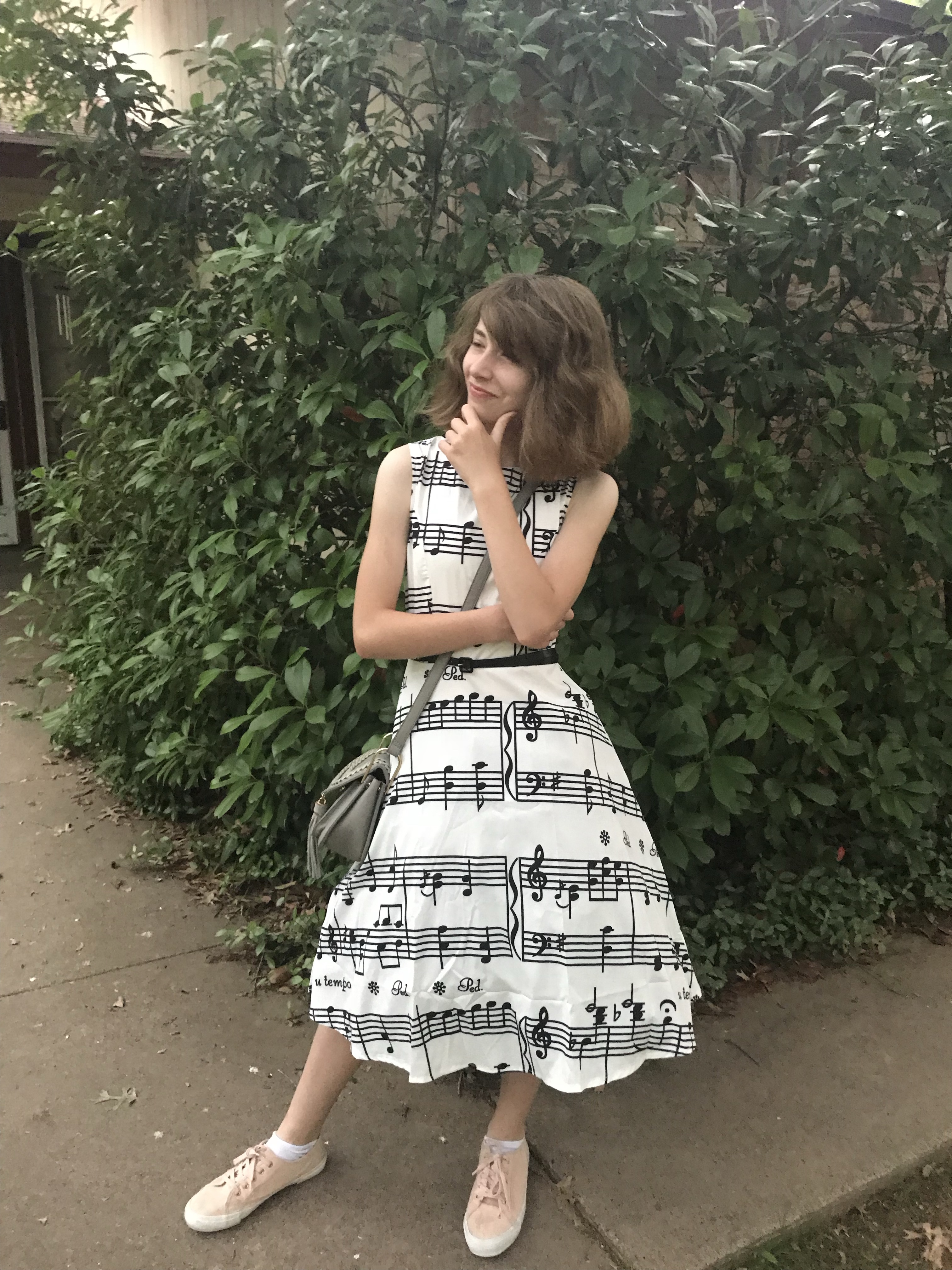
Not too long ago, I was preparing for work and I heard my 13 year old daughter Rebecca sobbing in her bed. I had assumed she was in trouble for something she had done and I had missed the argument.
“Rebecca, why are you crying?” I asked.
“I am just really sad right now,” she replied. “Ric Ocasek died today.” My eyes closed, my heart sank. Poor Rebecca – her favorite musician/artist was gone.
Rebecca is unique in every aspect. She is one of the most creative, innovative members of our family – and her entertainment choices don’t always follow the current trends.
Two summers ago, one of our most frequent activities on Friday nights became eating fun snacks for dinner and watching old musical performances of all genres. It was through these fun nights that Rebecca fell in love with The Cars. Stuart and her even developed a “must hear” listening list of 80’s bands – some of those bands I never even knew of myself! They regularly listen to bands off that list, checking them off as they go.
As Rebecca has matured, her love for old and vintage performances has expanded. She loves old movies, old television shows like The Andy Griffith Show, and of course, old music. For her 13th birthday, her grandmother gave her an autograph from Billy Gray, who played Bud in Father Knows Best. It is a treasure! She loves watching the show when she is at their house, and this gift was deeply sentimental for her. This year, she had really hoped to get an autograph from Ric Ocasek.
There is so much from the past that is good – and yet, we so often take for granted the older things; old fashion, old shows and movies, even old traditions. But these things were all so important at one time – and memorializing these things through sharing them provide a connection to someone from an earlier time and place. I think Rebecca has picked up on this connection, and has an interest in “the things of old” that most people don’t seem to have these days.
We have been conditioned to push forward, seek the latest and greatest, involve our kids in everything, and discard whatever is old to make way for better things. We are urged seek more modern ideals, and forget the past. I am all for progress that makes our world a better place – but sometimes, I think we toss out the good with the bad. I want my children to learn from their past, to connect with the positives, and to grow from the lessons learned. I want my kids to know the types of music we heard, experience the world we lived in through our stories, and from that, improve the world they live in.
My daughter doesn’t get her love of the old from just anywhere. My grandfather instilled within me a love of the stories from the past. I used to sit for hours listening to him every Sunday afternoon. There were many stories he had actually lived through – like the times he met Rachmaninoff and his masterclass with Percy Grainger. But there were other stories he shared from his wealth of knowledge – he could tell stories about music history that captivated you- as if he was actually there! Those stories brought me closer to him, and honestly, I consider him to be one of my greatest influences as an educator.
Stuart is invigorated through memories of his Papa and the things he did out on their ranch. When he was little, he would tag along with his grandfather as work was being done. Stuart has learned through his time with his grandfather the importance of using what is available – and good stewardship of the land. He also learned to think of hard work as fulfilling.
We have with intention placed our kids where their grandparents are a regular part of her life – and their experiences and stories are regularly shared. And we teach that while active lives and friendships are important, what is most important is reverence to God and family. As parents, we aren’t perfect, and neither are our stories. But Ric Ocasek and The Cars were at the heart of our youth, and Rebecca has in turn made it a part of hers.
 Without a Paddle
Recent Comments